TL;DR: An absolute delight of new knowledge.
Source: NetGalley, so many thanks to the publisher!
Structure: Starting with some of the earliest rug remains we have our author takes up forward in time showing how rugs have been used, recovered and lost.
Setting: This ranges from the Middle East to Japan and the Asian steppes. I was very excited about some surprising locations.
Readability: Even to someone like myself who knows nothing about rugs, this was absolutely fascinating.
Summary:
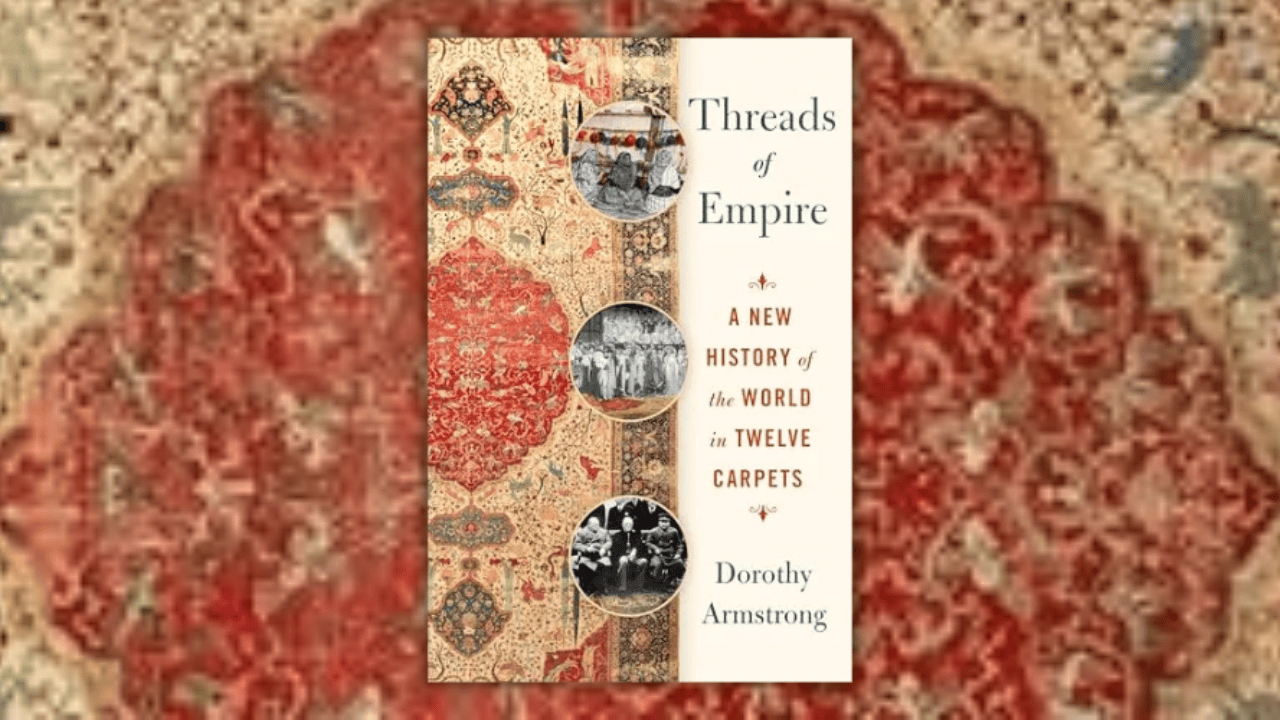
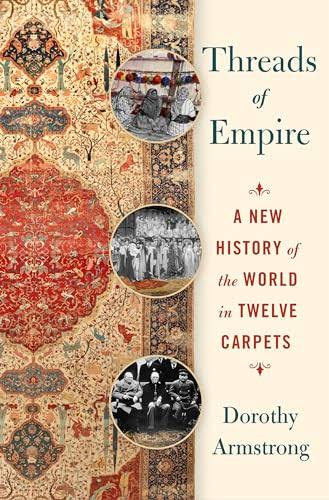
Dorothy Armstrong’s Threads of Empire is a spellbinding look at the history of the world through the stories of twelve carpets. Beautiful, sensuous, and enigmatic, great carpets follow power. Emperors, shahs, sultans and samurai crave them as symbols of earthly domination. Shamans and priests desire them to evoke the spiritual realm. The world’s 1% hunger after them as displays of extreme status. And yet these seductive objects are made by poor and illiterate weavers, using the most basic materials and crafts; hedgerow plants for dyes, fibers from domestic animals, and the millennia-old skills of interweaving warps, wefts and knots.
In Threads of Empire, Armstrong tells the histories of some of the world’s most fascinating carpets, exploring how these textiles came into being then were transformed as they moved across geography and time in the slipstream of the great. She shows why the world’s powerful were drawn to them, but also asks what was happening in the weavers’ lives, and how they were affected by events in the world outside their tent, village or workshop. In its wide-ranging examination of these dazzling objects, from the 5th century BCE contents of the tombs of Scythian chieftains, to the carpets under the boots of Stalin, Roosevelt and Churchill at the 1945 Yalta Peace Conference, Threads of Empire uncovers a new, hitherto hidden past right beneath our feet.
Thoughts:
Did I know much of anything about carpets or rugs going into this? Nah, I sure did not. Do I want to learn more now? Yes, yes please. Threads of Empire starts with some of our earliest examples of carpets and shows us, moving forward in time, rugs and carpets and what they indicate. She talks about societies and cultures, both those that still remain and a few that are lost. And she addresses the impact of colonialism, colonization, and war on this artifacts. What does it mean when they’re lost? What do they represent?
The writing is easy and friendly for a new reader – and bonus points, the audio book was fantastic. I especially loved the variety. You might think you know of the basic of rugs, but she takes us to several places I didn’t expect.
If you love niche nonfiction books like this, I think you could call this a micro-history, then pick this up. It’s an absolute delight of a book about a craft and item you don’t give a lot of thought to but has a rich history. I loved this so much I ordered a physical copy to see the pictures, so clearly I enjoyed it.


Leave a Reply